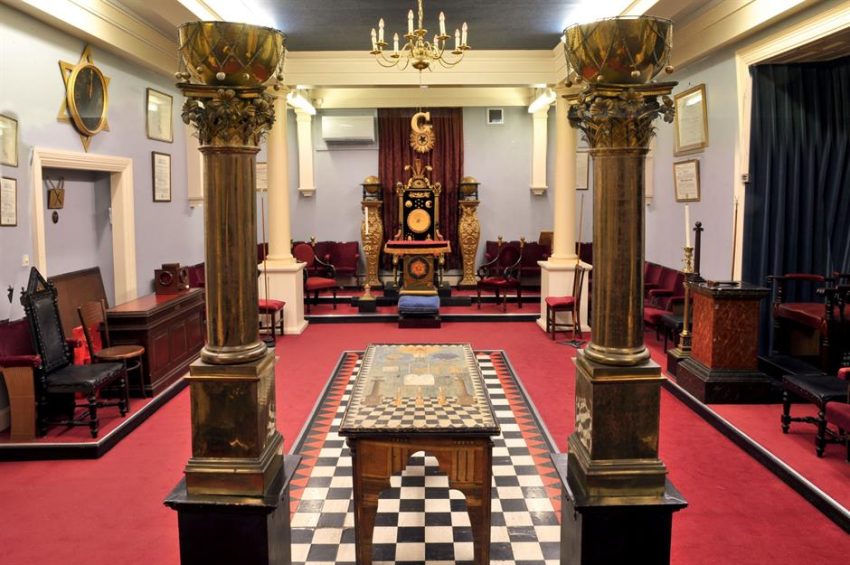
Freemasonry is one of the world’s oldest and largest fraternal organisations. It brings together men of good character who share common values, a desire for self‑improvement, and a commitment to helping others. Modern Freemasonry is built on centuries‑old traditions, symbolism, and moral teachings.
A Fraternal Organisation with Deep Historical Roots
Freemasonry traces its origins to the craft guilds of medieval stonemasons, the skilled builders responsible for Europe’s great cathedrals and castles. These operative masons used lodges as places to discuss their work, maintain standards, and regulate training. Over time, as cathedral building declined, these lodges began admitting non‑masons — becoming “speculative” or symbolic lodges focused on moral philosophy rather than practical stonework.
Modern organised Freemasonry formally began in 1717, with the formation of the first Grand Lodge in London. Today, it remains active across the world, with membership estimates ranging from two to six million. Freemasonry is especially strong in the British Isles and countries influenced by British traditions.
What Freemasons Believe
Freemasonry is not a religion, but it is a society with a spiritual foundation. Members are expected to believe in a Supreme Being, regardless of their specific faith tradition. The organisation encourages:
- Morality
- Charity
- Obedience to the law
- Self‑improvement through symbolism and ritual
The United Grand Lodge of England highlights Freemasonry’s four guiding values:
- Integrity — striving to be honest and ethical
- Friendship — building supportive and lasting relationships
- Respect — embracing diversity and unity
- Service — helping others and contributing to the community
How Freemasonry Works
The basic unit of Freemasonry is the Lodge, where members meet to conduct ceremonies, support each other, and carry out charitable work. Lodges operate under a regional governing body known as a Grand Lodge. There is no single worldwide authority; each Grand Lodge is independent.
Freemasons progress through a series of three symbolic degrees, based on the traditional craft guild ranks:
- Entered Apprentice
- Fellow Craft
- Master Mason
These degrees are taught through ritual dramas and lectures that use the tools and language of stonemasonry as moral lessons.
What Freemasons Do Today
Modern Freemasonry is centred on:
- Personal development — learning, reflection, and character‑building
- Fellowship — forming meaningful, supportive friendships
- Charitable giving — local, national, and international relief efforts
- Community engagement — contributing to society through voluntary action
Freemasons participate in social events, ceremonies, mentoring, and organised charity work — but above all, they work on building themselves, not buildings.
Women Freemasons
Although many people assume Freemasonry is exclusively male, women have been part of Freemasonry for centuries through organisations known as Women’s Freemasonry or Co‑Freemasonry. These bodies operate in parallel with male Craft Lodges and share similar values, rituals, and traditions.
The movement has also attracted many creative minds including writers such as Rudyard Kipling, Sir Arthur Conan-Doyle, and Oscar Wilde; classical and popular musicians such as Mozart, Sibelius, Arthur Sullivan and Louis Armstrong; artists such as William Hogarth, John Soane and Alexander Nasmyth; scientists like Edward Jenner, Alexander Fleming and Edward Appleton; philosophers Montesquieu, Voltaire and Proudhon; explorers Ernest Shackleton, Robert Scott (of the Antarctic) and ‘Buzz’ Aldrin; sportsmen like Len Hutton, Clive Lloyd and Geoff Capes; entertainers such as Alfred Marks, Edmundo Ross, Roger de Courcey, Peter Sellers, Joe Pasquale and Jeremy Beadle; and the philanthropists Dr. Thomas Barnardo and Henry Dunant, founder of the International Red Cross.